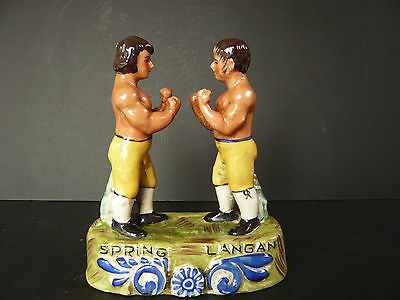
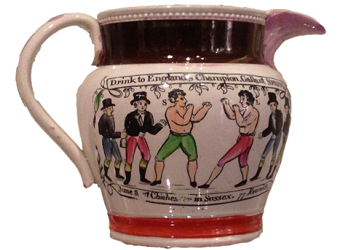
This post is based on the talk ‘The Battle of Birdham Bridge’ given by Roger Thomson in June 2025
The Battle of Birdham Bridge (1824) was for the all England bare-knuckle championship involving the second fight between the then current champion, Tom Spring, and the Irish Challenger, Josh Langan. On the previous occasion Spring had been declared the winner. However, because of the numerous ring invasions, neither man was satisfied with the outcome. Hence the rematch.
To go back a couple of years – in May 1822 Tom Cribb, the long-standing England champion, retired. Two men, Tom Spring and Bill Neat (sometimes spelt Neate), were thought likely contestants to take the crown. Neat challenged Spring for the title and was accepted.
Spring versus Neat 20 May 1823
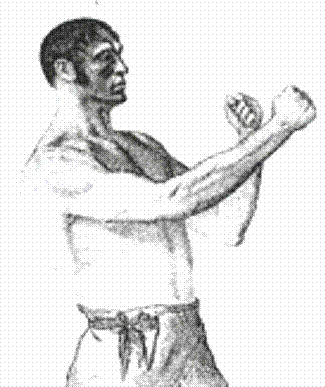
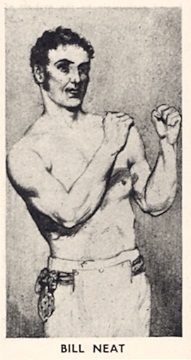
The fight took place at Hinckley Down, near Andover, before an estimated 35,000 spectators. It was brief and decisive. Neat went down to blows from Spring or was thrown over and over. In the fourth round it seemed his right arm was injured. After struggling for a few more rounds he walked up to Spring and conceded. The crowd jeered and booed. This was not the championship fight they had come to see. In just over half an hour the man many believed to be the true champion had conceded defeat while still on his feet. There were rumours that it had been fixed. But when the surgeons examined Neat it was confirmed he had broken a small bone in his arm. Spring was now the undisputed champion.
The fight is recorded in Chapter VI (How Tom Spring and Bill Neate fought) of ‘Carinthian Jack’ by Charles E Pearce first published in 1920 by Stanley Paul & Co
Spring versus Langan 7 January 1823
Spring’s first challenge as champion was from Josh Langan, a fighter from Ireland. The fight was set for January 1824 at Worcester racecourse.
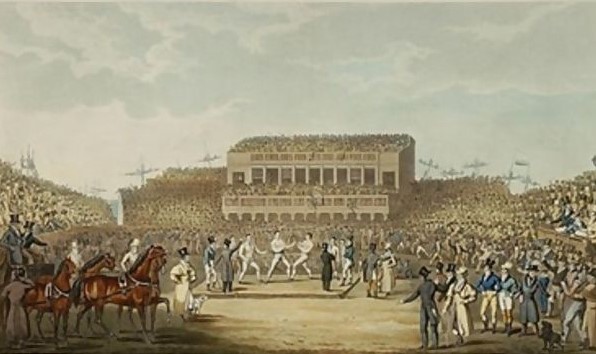
That fight was a disaster. Early on two temporary stands collapsed, sending spectators crashing to the ground. The ring was poorly roped and the constables had a hard task keeping the crowd back. At times the ring was so crowded that the combatants were struggling to find room to fight. Finally, Spring went to work in earnest before it ended in total chaos. He hit hard, bringing his opponent down several times. At the end of the 77th round Langan was insensible.
The fight is recorded in a poem by W.Mitford sung to the tune of the Cuckoo’s Nest (Sourced from Newcastle University special collection)
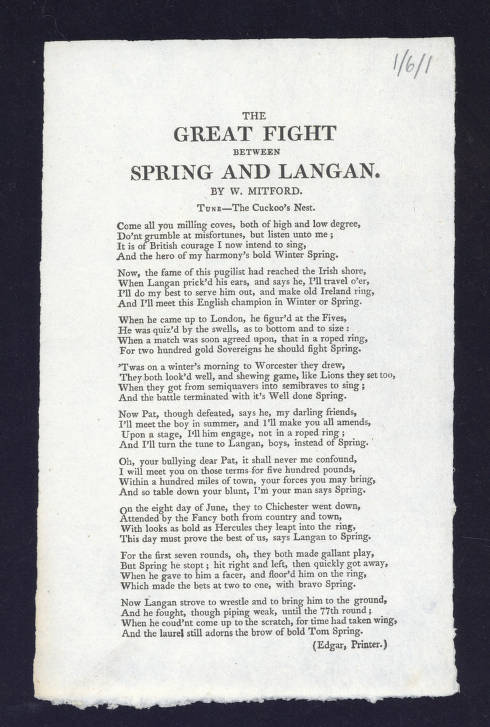
Spring versus Langan 8 June 1824
Neither man was satisfied with the outcome, so a return match was set. After much haggling over several months the match was set at £500 a side, on a bare stage 24 feet square, and raised six feet above the ground. The date was set for the 8 June.
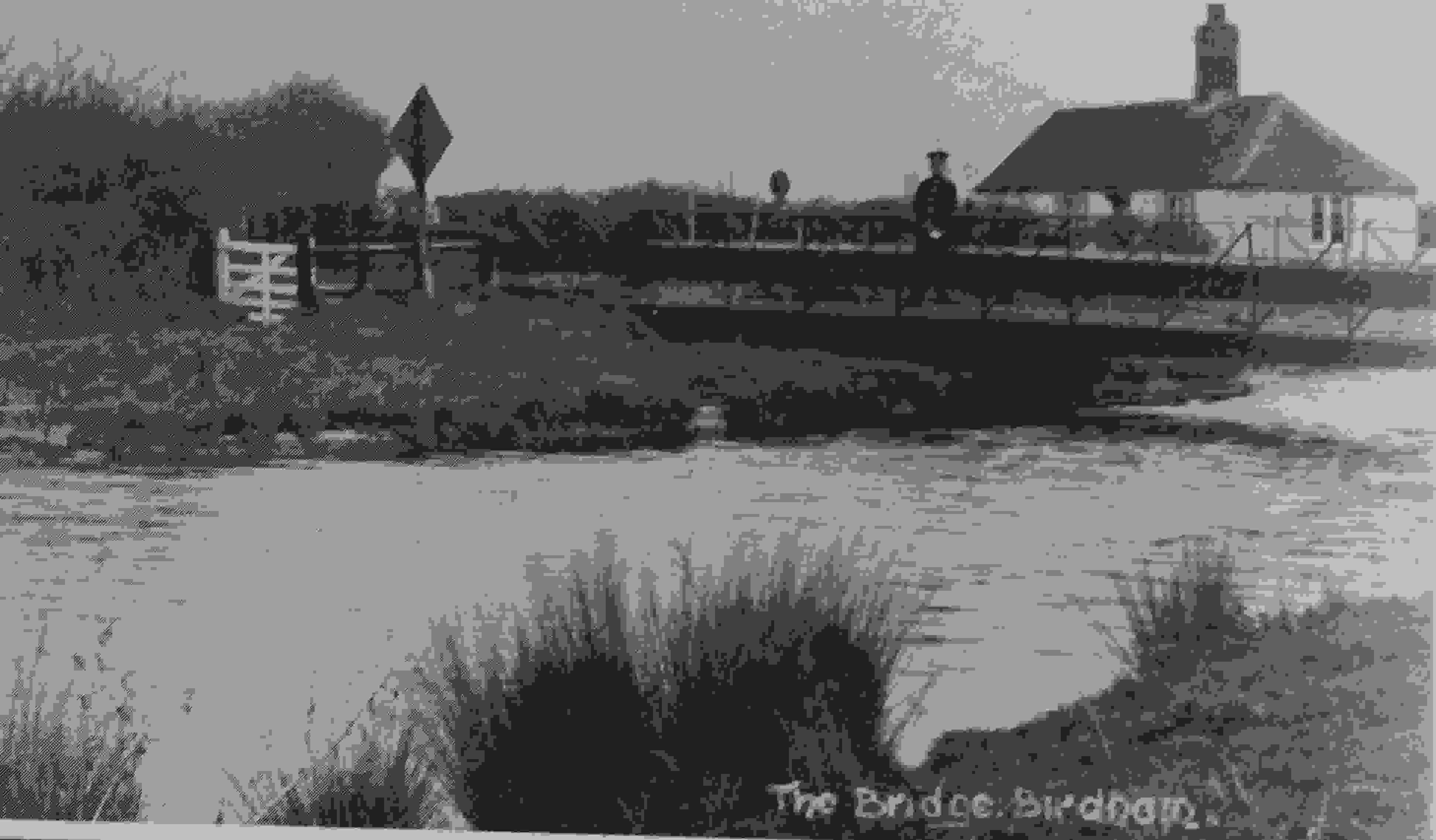
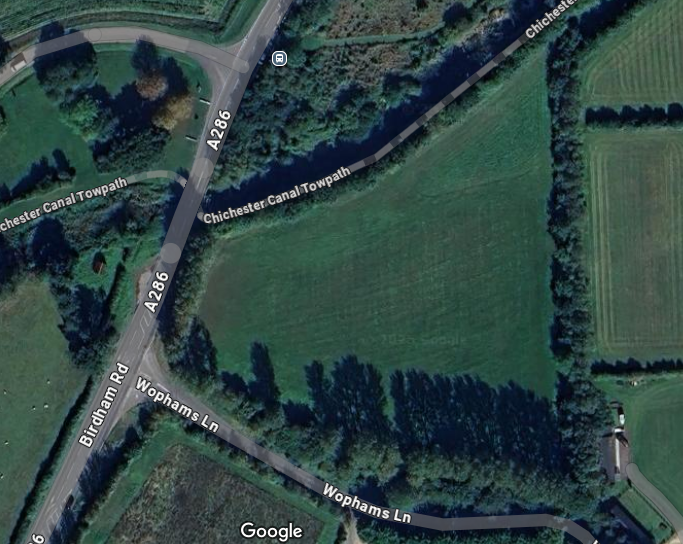
At first Warwick racecourse was the site selected. Langan at once took a coach for Leamington, the nearest coach station to Warwick. But he took the wrong coach and was headed for Lymington, on the Hampshire coast. He was quickly put right by the coachman and then headed north. But a magistrate at Warwick declared that he would arrest the combatants if they tried to fight. So the venue was switched to Chichester on a large triangular field to the South of the canal, accessed via Birdham Bridge a swing bridge, properly known as Cutfield Bridge,
An express was sent after Langan, and he was obliged to turn round and head south again. He got to Slough by 2:00am on Monday morning. After 5 hours sleep, he was off again.
Spring was more cautious. He stayed in London till the venue was confirmed and then set off on Sunday, arriving in Godalming on Sunday night. He therefore had the advantage of a short journey, rest, light exercise and a composed mind. He travelled on to Chichester on the following Monday.
The Morning Press had this to say of the city. “Buried at one extremity of the county of Sussex, neither sea-port nor inland, this city has for years had a doubtful and amphibious existence. Disregarded by the sailors, laughed at by the marines, unimproved by Cockney intercourse, its inhabitants have grown sleek and soft-headed in this monotonous existence, and an incident like a fight for the Championship was caught at as likely to raise them to importance, and give one feature to their dull annals. Woe to those who have ears to listen and button-holes to be laid hold of for the next half century!”
They did have some words of praise. Further on they wrote, “The people of Chichester, for all their simplicity, have shrewd notions of the depth of a stranger’s pocket. Guinea tickets were issued for the grandstand. But above all price was the lesson set to the innkeepers of the interior by the moderate item in each bill of “Bed; a Guinea”. These were the golden hours of sleep indeed!”
The building of the ring took place on the Monday, the day before the fight. Farmers volunteered their wagons to form the outer ring – fifty-three wagons in total.
Coaches were already on their way from London and were crammed – even at double the normal rate. The taverns along the way were keen to provide for the travellers, offering “second hand eatables, bad liquor and high prices”. In the city the residents braced themselves to receive 12,000 fans – a city with a then population of around 7000. The crowds milled around the streets, pouring in and out of the inns, jeering, cheering, grinning in at windows and teasing the women. The citizens were relieved when a better class of fans arrived. The nobles included dukes and lords, knights and colonels. Less noble but more exciting was the arrival of the current heroes of the ring and the old masters.
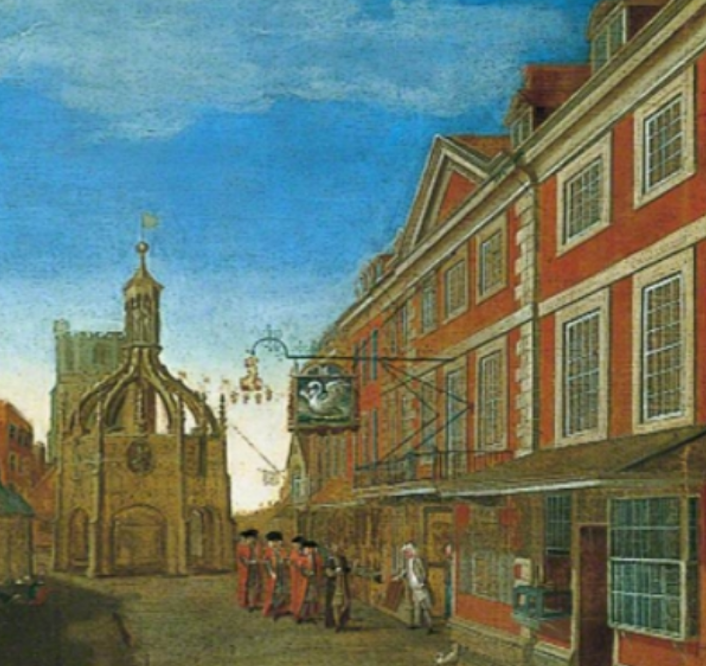
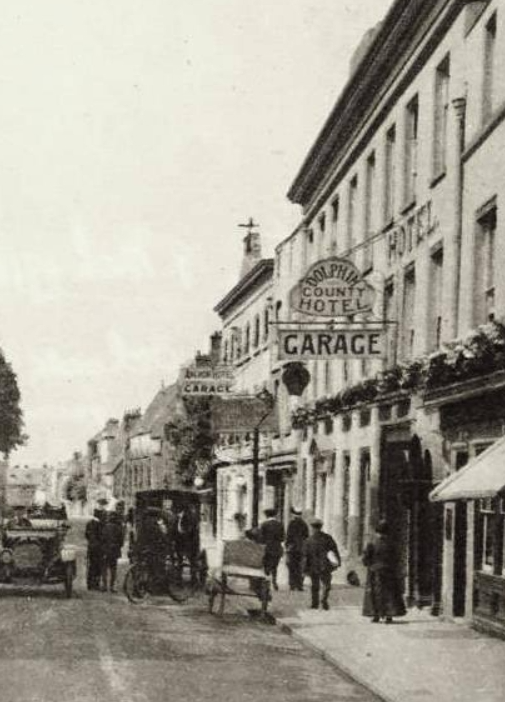
All the inns were packed, even at the previously mentioned price of a guinea a night. Others, unable to find rooms, stayed up all night, while yet more set off to walk through the night to the ground, sleeping in ditches on the way. At 7:30 in the evening an open barouche was drawn down East Street and pulled up at the Swan. Tom Spring, Tom Cribb, acting as his second, and a few friends were recognised and cheered by the crowd. Langan arrived shortly after and put up at the Dolphin. He had travelled 300 miles in 2 days, with little sleep – not the best preparation for a championship fight.
The Dolphin West Street (right) in later years
(Images sourced from Chichester Pubs)
On the Tuesday morning it was all confusion at the inns and hotels. Bells ringing and chambermaids running. Breakfasts were ordered by some but stolen by another. All that was expected when beds for one were occupied by three.
At the ground trouble was brewing. The Landlord of the Swan had offered £200 to the fighters, hoping to recoup this at the ground, via charges for grandstands and wagon seats. However, when he arrived he was horrified to find that gentlemen of the London fancy had taken control of the swing bridge and were attempting to charge a half crown for entering the field. The landlord threatened to cut down the stage if it continued. The dispute was finally resolved as most punters avoided the issue altogether by taking another route, crossing the canal at Donnington. The attempt to charge a toll was abandoned.
The stage was set. The umpires and seconds entered the ring first. Finally, the fighters – Spring and Langan. They bounced into the ring to great applause. After a few friendly words they took their positions. The first few rounds were routine – blows were exchanged, stopped. The skill of both fighters was evident, drawing calls of praise from the crowd. Rounds were lasting several minutes. Both fighters were thrown.
The first significant sign of trouble was in Round 15, when it became clear Spring’s left hand was swollen and useless for striking. His hands had always been his weakness. However, Langan failed to take advantage. From this round to the 33rd he was thrown every round. Many times the crowd thought it was all over – that Langan could not come back from his last throw. But he did – repeatedly. There were calls to “Take him away” from all corners. In the 47th Tom Cribb called out to Langan’s second “Tom Belcher you will certainly be lagged if you don’t take your man away.” (By this he meant convicted and transported – supporters of fights could face manslaughter charges if a fighter were killed). Belcher’s response? “We shall win it!.”
A fall for Langan in the 56th was so hard that it seemed sure to be over – but it was not. In round 74 Cribb called out again “You are a brave man Langan but you cannot win it”. Finally, in the 76th he was gently laid down by Spring and was insensible at the call. After one hour and forty-nine minutes Spring was declared champion. When Langan came to he was told it was all over. His only response? “Oh dear.”
Spring was asked if he would defend the title again, “I never will” was his answer.
The trip back to Chichester was heralded by crowds on all sides. Women waved handkerchiefs from their windows. Tom was borne to the Swan, where he was bled, bathed and put to bed. Despite his injuries he seemed cheerful and collected. He had reason to be – his last three fights had earned him over £1000, plus side bets – all in just over a year.
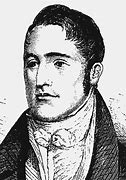
Tom kept to his word and did not fight in the ring again. He did not walk away from boxing entirely sometimes acting as second to other fighters and establishing the “Fair Play Club”. Tom died in 1851. He was 56 and was buried in West Norwood Cemetery. (Sourced from ibhof.com)
A bridge still crosses the canal, but it is no longer a swing bridge. It was replaced by a fixed bridge in the 1920s. The field is now a peaceful spot with no sign that it was the site of a boxing match, lasting two hours and watched by 12,000.